
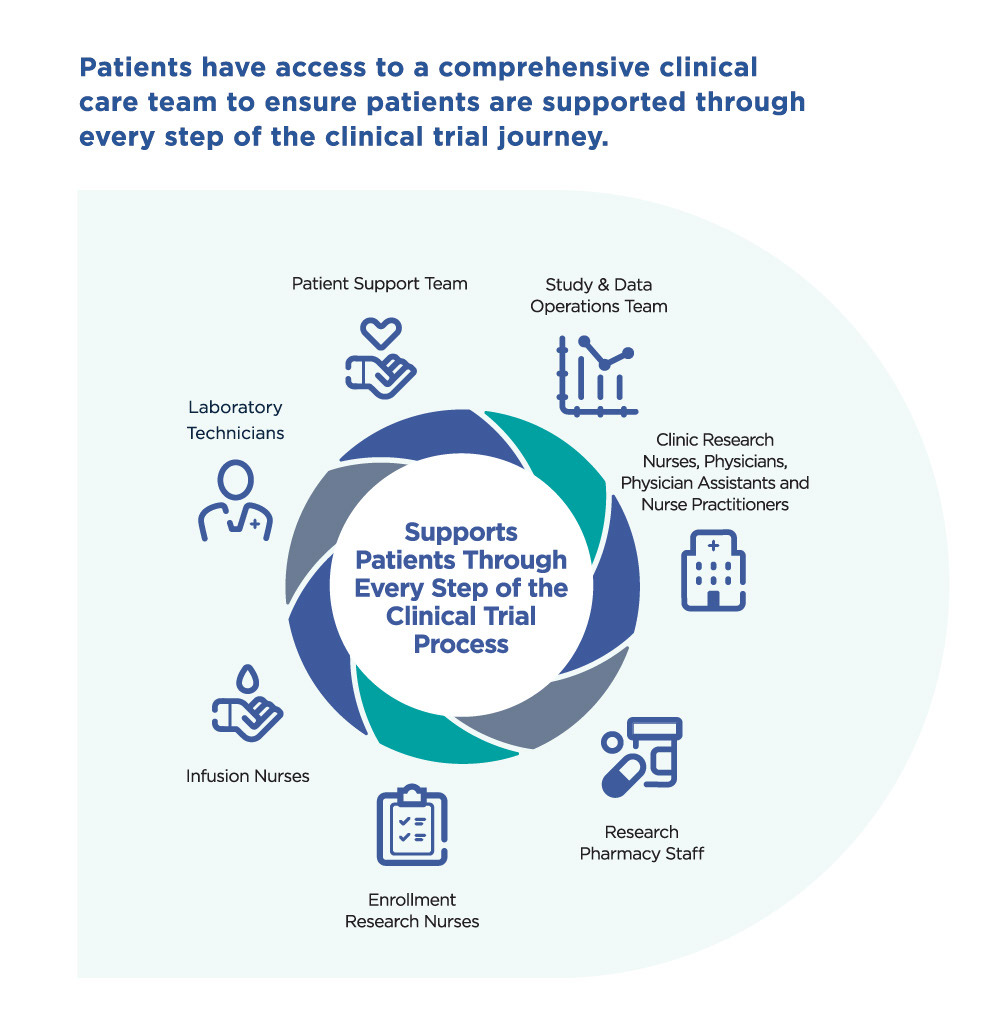
MOHC recognizes the significant challenges of navigating a cancer diagnosis and is committed to providing you with the most advanced and personalized cancer care.
Depending on your medical condition, you may be offered participation in a clinical trial. The purpose of these studies is to provide our patients with access to the latest investigational treatments as quickly and safely as possible. This can ultimately lead to the introduction of new therapies to the wider patient population. MOHC is dedicated to improving patient outcomes by actively seeking new and improved treatment options through research.
Ask your Provider if you may benefit from a clinical trial!
Our Affiliations
Trials are available through various pharmaceutical companies, in addition to NCORP and SCRI programs. Collectively, over 125 studies are generally available at any given point in time.
Medical Oncology Hematology Consultants is also the proud recipient of the 2008 American Society of Clinical Oncology (ASCO) Clinical Trials Participation Award. Our practice is one of ten community oncology practices selected for this distinctive award.

Medical Oncology Hematology Consultants is an established research leader in communities throughout Delaware and offers clinical trials through Sarah Cannon Research Institute (SCRI), one of the world’s leading oncology research organizations conducting community-based clinical trials. SCRI has contributed to pivotal research that has led to the majority of new cancer therapies approved by the FDA today.
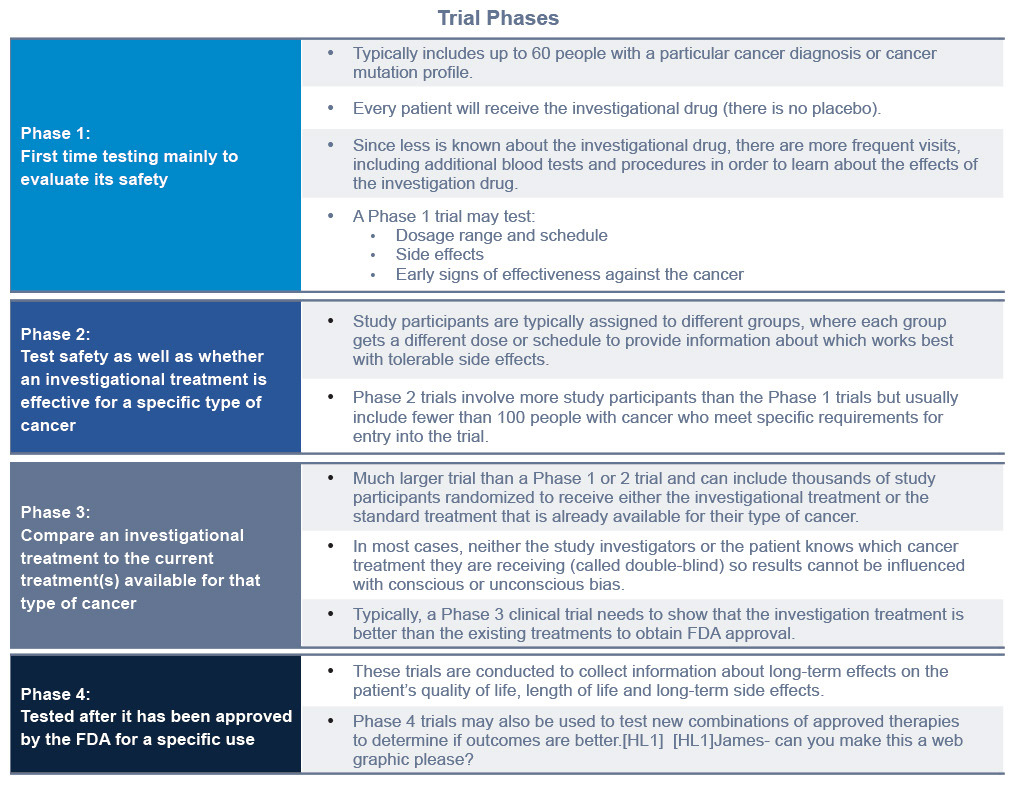
What are the different phases in cancer research trials?
If your medical team suggests a clinical trial for you, you will be made aware of the phase and what you may want to consider before agreeing to participate. When a clinical trial is opened at a site, the trial is categorized as one of four different phases. Most investigational cancer treatments are typically evaluated in Phases 1, 2 and 3 trials to determine if they are effective and well tolerated. Some cancer treatments are tested in Phase 4 clinical trials after they have been approved by FDA to provide additional information about the treatment’s risks, benefits and optimal use.
The use of a placebo — or inactive medications — are never used in place of the best-known standard of care. If they are used, they are given alongside an active medication. Patients can rest assured that they are receiving treatment when participating in a trial.